From Silicon Valley to Southeast Asia: Vinnie Lauria’s Journey with Golden Gate Ventures
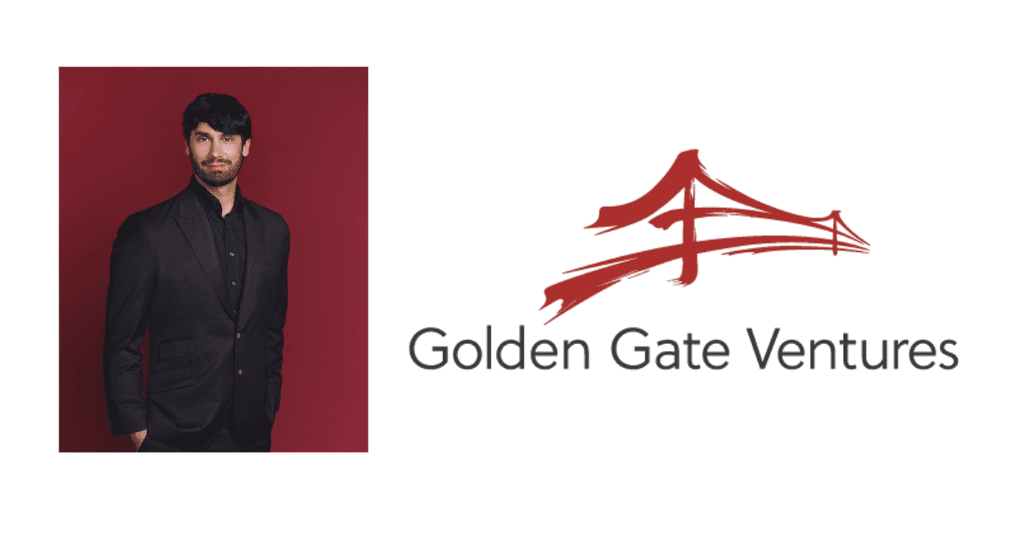
Golden Gate Ventures has become synonymous with early-stage venture capital in Southeast Asia, having backed over 90 companies across the region since its founding in 2011. With more than $250 million in assets under management and a portfolio that has raised over $1 billion in follow-on funding, the firm is now ranked among the Top 5 VC funds in Southeast Asia by KPMG. Behind this success is Vinnie Lauria, a former entrepreneur turned venture capitalist who helped shape the VC landscape in one of the world’s fastest-growing startup ecosystems. Since founding Golden Gate Ventures, Vinnie has championed regional-first investing and cross-border innovation, helping to catalyse the next generation of Southeast Asian founders. In this exclusive conversation, Lachlan Good sat down with Vinnie to explore what originally brought him to the region, how Southeast Asia’s startup ecosystem has evolved, and what he sees on the horizon for both local founders and global investors. We also touch on the unique cross-border opportunities emerging between SEA, Australia, and beyond.
CATEGORY:
Founder Stories
DATE:
July 21, 2025
LG: "What originally drew you to Southeast Asia and how has the Venture Capital landscape evolved since you started Golden Gate Ventures?"
VL: "In terms of Golden Gate Ventures, I didn't really think I was going to be starting a VC. I really didn’t think I would be setting something up in Asia. I’m a former computer developer engineer, and I had two companies behind me. One failure with a bunch of lessons learned, we raised money, but I shut the company down. Another one that was a minor success gave me the ability to take some time off. I used that as an opportunity for my wife and I to take an extended honeymoon and travel around Asia.
The plan was to go around the globe. This was 2010, and every time I entered a new country, I wanted to understand the startup scene. That’s just what I geeked out on. China wasn’t my first stop, but when I got there, it turned my world upside down. Tencent was already public, and I realised there was a strong startup scene there. It challenged my thinking that innovation only happened in the U.S.
Then I traveled around Southeast Asia, it was the opposite. There wasn't a startup scene and very few founders, but massive industrial growth. Cranes everywhere, buildings going up 24/7 in places like Jakarta and Singapore. I thought, "I kind of know where the next 10 years are going."
What really sealed it was one of my first angel investments: MoneySmart. I met the founder, loved the idea, and thought it was a slam dunk, it worked in the U.S., so why not here? I tried to bring in friends and VCs from the U.S. to invest, but everyone said no. They didn't want to invest outside the U.S. That was my "aha" moment: there was a massive opportunity in Southeast Asia, and nobody from the U.S. was paying attention. I realised I had a unique network and experience to fill that gap. That’s what led to starting Golden Gate Ventures."
LG: "Were there any unexpected challenges or cultural learnings early on?"
VL: "A ton. I had no idea how to raise a fund. I went to Sand Hill Road in Silicon Valley and pitched over 20 VCs. I got 20 "no"s. One VC finally took me aside and explained the structure, fees, LPs, why you raise from family offices, not other VCs. I had never heard of "family offices" before.
Raising money in Asia was very different from Silicon Valley. In the Valley, you meet someone for coffee, they shake your hand, and they’re in. In Asia, it’s about relationships: Who are you? Who introduced us? What’s your pedigree?
Also, Asian investors were skeptical. Many had been burned during the financial crisis. They thought there was nothing worth investing in outside of Silicon Valley. Ironically, so did my U.S. friends. So both sides thought there was no opportunity outside Silicon Valley. You had to be the crazy one who saw it before others did."
LG: "You’ve done some work in Vietnam recently as well. What are your thoughts on what makes Vietnam stand out as an innovation hub within Southeast Asia?"
VL: "I don’t know if I’d call it an innovation hub, but it stands out as an ecosystem. What I’m investing behind is the rising middle class. Vietnam is going to have astronomical growth over the next 10 years.
Two main reasons: First, the U.S.-China tensions have shifted global supply chains toward Vietnam. I didn’t even know that when I moved there. Second, the people. Vietnamese founders are different from most Southeast Asia, they're more similar to East Asia: China, Korea, Taiwan. Public school in Vietnam is six days a week. There's a strong work ethic, and a lot of developers moonlight by outsourcing for U.S. companies.
They’re used to solving complex problems with sophisticated software. So to me, it's really betting on the people and a rapidly growing middle class. Phenomenal entrepreneurial talent."
LG: "Are there any particular sectors in Vietnam that you see leading in the next 10 years?"
VL: "It’s less about what entrepreneurs want to build and more about where is the 'consumer demand'.
Vietnamese families spend heavily on their kids' education, more than any other Southeast Asian country, including Singapore, as a percentage of income. They also spend a lot on healthcare, particularly for their children. The public system is slow and inconvenient, so they turn to private healthcare.
The third area is property. Families save and invest in property. That points to opportunities in financial services: property related tech, investment services, and B2B payment infrastructure. It’s less about flashy consumer wallets and more about enabling real transactions and services behind the scenes."
LG: "What are your thoughts on cross-border opportunities between Southeast Asia and markets like Australia? As someone who's spent time between both regions, I'm interested in your view on talent flow and early stage capital allocation."
VL: "We've invested in over 100 companies in the last 15 years, and all our biggest successes are cross-border. So yes, you have to go cross-border.
Vietnam for example, has a glass ceiling. Cross-border movement is hard. The airport experience in Ho Chi Minh is painful. Moving money in and out of the country is painful. Visas for international talent are painful. Vietnamese founders can’t even own equity in a foreign company. That’s a problem.
In contrast, our Indonesian companies expand easily to Malaysia, the Philippines, Thailand. Cross-border capability is essential.
We try to identify founders who can navigate that complexity. Anyone can write "regional expansion" in a pitch deck. But actually leading, managing, and inspiring teams across cultures takes a unique skill set."
LG: "Do you think founders in Southeast Asia have become leaner and more tech-leveraged post pandemic?"
VL: "I don’t think it’s a post pandemic trend, it’s AI. Founders are using AI to become leaner. I'm not hiring as many engineers now because I'm using AI to code alongside of me. So I think it's not post pandemic, but it's AI."
LG: "Will the use of AI reshape how you evaluate early stage companies?"
VL: "Not yet. Early stage investing is still all about people. There’s very little data to analyse. It’s about whether a founder has the capability to build something big.
We use AI to identify global trends and themes to validate investment theses, but not at the individual level.
If AI ever gets to a place where it can deeply analyse personality traits, that might change things, but it raises privacy and ethical concerns. It would also require vast amounts of personal data that we’re still years away from collecting. So for now, early stage investing is still human-centric."
Vinnie Lauria’s journey from Silicon Valley engineer to one of Southeast Asia’s leading venture capitalists is a testament to the power of long term conviction, regional insight, and a founder-first mindset. His perspective highlights not only the incredible momentum building across Southeast Asia’s tech ecosystem but also the importance of staying grounded in people, purpose, and patience.
As Golden Gate Ventures continues to back the next wave of startups, Vinnie’s reflections offer valuable guidance for founders, investors, and ecosystem builders navigating the opportunities and complexities of this dynamic region.
For those looking to operate or invest across borders, Southeast Asia remains one of the most compelling markets in the world, and voices like Vinnie’s help illuminate the path forward.