From Global Banking to Early-Stage Ventures: Randolf Clinton on Building Companies That Last
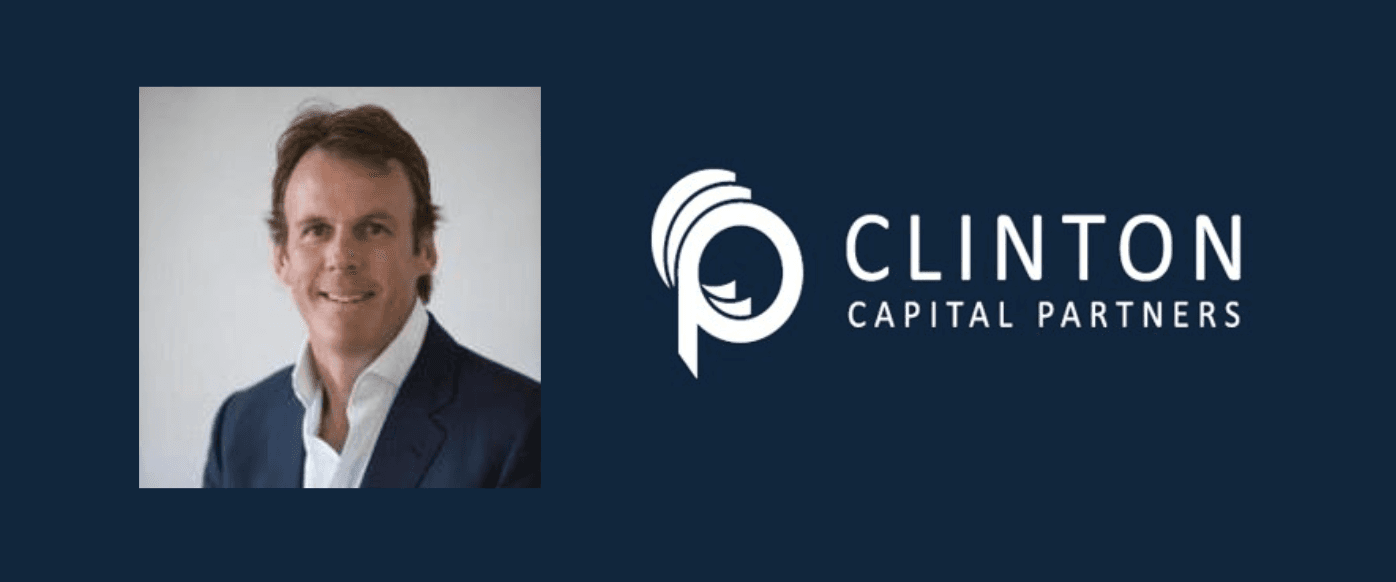
Randolf Clinton, founder of Clinton Capital Partners, has built a reputation as one of Australia's leading venture advisers. With over $500 million raised across 70+ transactions and a network of 5,000+ investors worldwide, his firm specialises in capital raises between $5 million and $100 million for high-growth technology companies. Before launching Clinton Capital Partners, Randolf held senior investment banking roles in London, Singapore, and Hong Kong, bringing a truly global perspective to every deal. In this interview, he shares his philosophy of "Yesterday's Principles for Tomorrow's Companies" and the lessons founders need to know before stepping into the room with investors.
CATEGORY:
Founder Stories
DATE:
September 8, 2025
The Interview
LG: Thanks for joining me today Randolf, you've had a fantastic career across different financial hubs such as Singapore, London, and Hong Kong before launching in Australia. How has that global experience influenced the way you build relationships with founders and investors locally?
RC: I think it's very important. The global financial market is truly global in nature, and that has continued to accelerate over the last number of decades. Many years ago you could be an Australian investor focussed purely on Australia, but now as you are probably well aware, you look at the big industry super funds, the big asset management companies, the family offices, today they're all investing a good proportion of their funds in the international market. Certainly having that connectivity and that works flip side, Hong Kong investors likewise, US investors likewise, European investors likewise, all of them are investing outside their boundaries. So having the experience and the relationships across the globe have certainly been very beneficial for that.
LG: Clinton Capital Partners often emphasises that "yesterday's principles for tomorrow's companies", how do values such as honour, integrity, and humility shape the way you choose founders to back?
RC: That's really our key threshold and our first crucial point. If we can't trust the individuals that we're potentially allocating funds to, then that journey will never begin. We always say, the Titanic was the greatest ship in the world, but one idiot sunk it, so we have to have confidence about he or she who has their hands on the wheel.
LG: What was some of the biggest challenges that you faced when starting Clinton Capital Partners in Australia, and how did you overcome those?
RC: There's always challenges in starting new businesses. Brand recognition is clearly one and therefore getting traction. I suppose the benefit that we had is the partnership. My partner and I had a good number of years' experience in the financial arena, and with that came a long list of relationships that we built over many years, whereby people trusted us. That certainly made our entry into this market a lot easier than if we started from a clean skin without any experience or relationships.
LG: I truly believe trust is such a vital aspect when starting new businesses. Furthermore, you've been involved in very diverse sectors from Agtech with Agriweb to Medtech, with Lumitron. What's one common thread that you look for across such different industries?
RC: The first point I'll say is that we are sector agnostic, and the reason we say that is because I personally have never invested just in one sector. For example let's just take retail, we may pick the best retail stock in that sector, but the retail sector may be the worst performing sector for 10 years. So we've always looked at companies rather than vertically, horizontally, aligned across industries. The second point, and the key for any investment is $1 in, $2 out. So, while there is a lot of thematic and a lot of social causes out there, which we absolutely support, at the end of the day, we call those dividends. If you don't get the capital return, the $1 turning to $2, you won't get those social benefits or those dividends in return.
LG: In some deals you've acted as a lead and in others more as an advisor or co investor. How do you decide what role to play and what factors push you forward to being more hands on in terms of investing?
RC: We operate all our transactions in the same fashion, which is a tri-party relationship between ourselves, the company and the incoming investors. We're the marriage celebrant that brings all those parties together. We try to invest in all of our deals, so that there is alignment, there's no arbitrage between any one of those three pillars, because once you get arbitrage between one of those pillars, based on history, over time that gap only broadens, and that's not in the best interest of all.
LG: You've built a global network of over 5,000 investors. How do you determine which investors are the right cultural fit for a particular founder or company? From my own experience, I've noticed that in certain scenarios, teams don't always click as well across cultures—for example, between Asia, America, and Australia.
RC: We spent a lot of time with our investors, understanding what their DNA and ethos was all about, and you work out pretty quickly, who's going to connect with whom? We've seen, obviously the flip side of that, whereby wrong investors have been aligned with the wrong companies and that's really turned into quite an unfortunate and unpleasant relationship, because as you appreciate in the private markets, and particularly early stage private markets, those relationships invariably last for a very long period of time. They are not 6 or 12 month trades. Both a company and an investor are joining at the hip for realistically, a five to ten year relationship and they've got to work and support one another over that period of time.
LG: Looking ahead, sectors like AI, FinTech, and sustainability, which of those do you believe hold the most promise for Australian founders competing on a global stage or could it be all three of them together?
RC: I think in each vertical or each little industry pod, there's specific nuances, and there's some, very impressive talent emerging in each of those. I'd hate to ring-fence and say Australia's only going to be renowned for AI or Medtech or EdTech, because I don't think that's fair on all that talent that's certainly come up the pipes.
LG: Many first time founders often underestimate the challenges of raising capital, from your perspective what do you think is the single biggest mistake that you see entrepreneurs make when approaching VCs?
RC: The reason why we set this business up 10 or 12 years ago is because we saw the challenges start-ups face when raising capital. If you have $5m EBITDA or $5m ARR and above, today you can close your eyes, throw a dart and you will hit a cheque. If you don't have those metrics, it is very lonely, often companies don't know where to start, and the time allocation to raise capital can often impact the business - it's like finding the needle in the hay stack.
LG: Would you say that goes for a globally, or most specifically in Australia?
RC: I think that's globally. We would always say that the worst thing that founder can do in their early stages of evolution is spend 11 hours every day looking out in the rearview mirror. They really need to be looking at the front windscreen in terms of growing the business. If they're distracted by trying to meet investors raise capital, acknowledging how long the capital cycle can be, that can have severe consequences on a business, it's momentum, traction and metrics, which in return can impact the capital discussions. This is the reason we set up CCP to remove this hurdle for early stage companies, so we procure each of the respective companies and the investors across a very large universe, then deliver the two to one another.
LG: Finally, you've seen companies all the way from seed to exit. If you could give just one piece of advice to a founder staying relevant in a global market and the importance of having that cultural adaptability, what would it be?
RC: I'll say two. Focus on share price versus valuation and keep your capital stack as vanilla as you possibly can.
Conclusion
Randolf's insights highlight the critical importance of trust, global perspective, and strategic alignment in venture capital. His emphasis on the "marriage celebrant" role that Clinton Capital Partners plays demonstrates how effective intermediaries can bridge the gap between founders and investors. For entrepreneurs, his final advice to focus on share price over valuation and maintain a simple capital structure provides valuable guidance for navigating the complex world of venture funding. The conversation underscores that successful investing transcends geographical boundaries and sector limitations, ultimately coming down to the quality of relationships and the integrity of the people involved.